About Forged
In 2014, out of a love for cooking and dining, the idea arose for a distinctive, attractive, high-quality, and affordable knife series. This idea progressively took shape, and in 2015, it was time for the brand Forged to make its debut. All knives are hand-forged in a small but passionate knife factory, making each knife unique. The Japanese would say: Wabi-sabi. After years of use and maintenance, each knife develops its own character and only becomes more unique over the years. 🔥

Forged knives
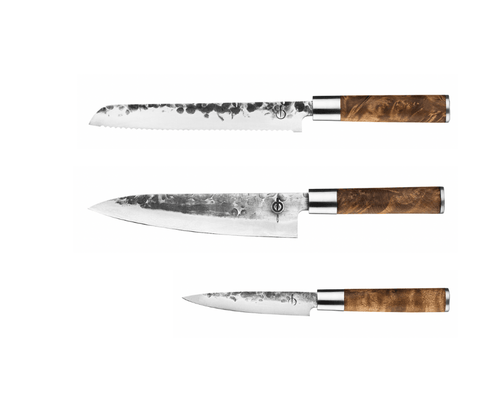
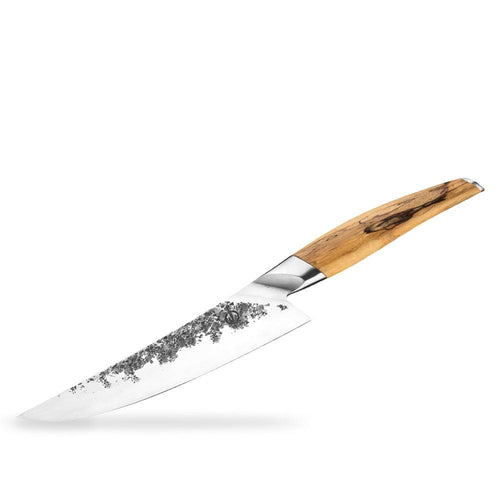
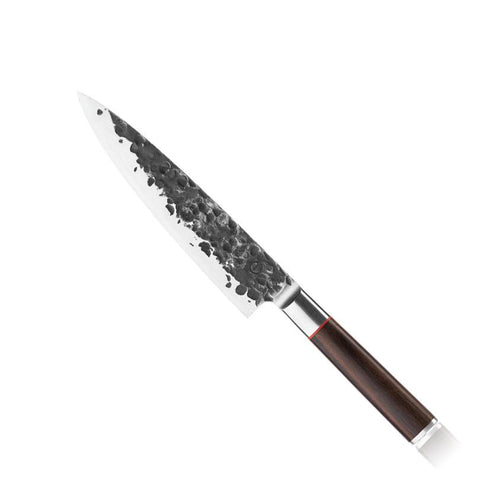
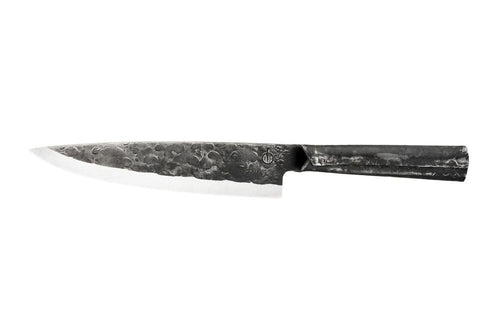
Forged knives are made from Japanese steel and sharpened at an 18-degree angle. The Forged knife collection consists of six different series, each with its own style. The Olive, Sebra, Intense, and Brute series are made from 440C steel. This is a stainless steel with a hardness of 58 Rockwell. For the VG10 and Katai series, VG10 steel is used, which has a hardness of 60 Rockwell, keeping these knives sharp longer. The steel is hand-forged in five layers, is durable, and corrosion-resistant.
The Forged series at a glance
The six different series are all equally unique. Here they are:
- VG10: As the name suggests, the knives in this series are made of VG10 steel. The unique root wood handle gives the knives a luxurious look.
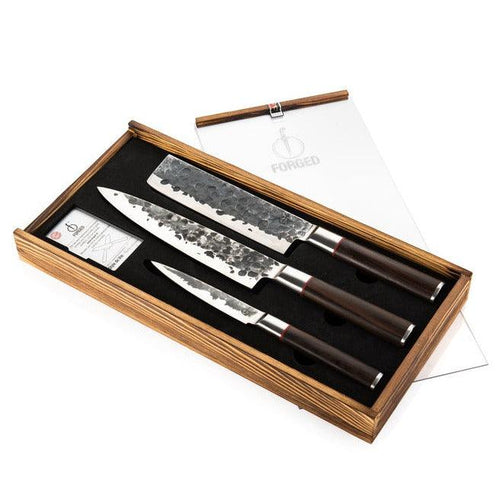
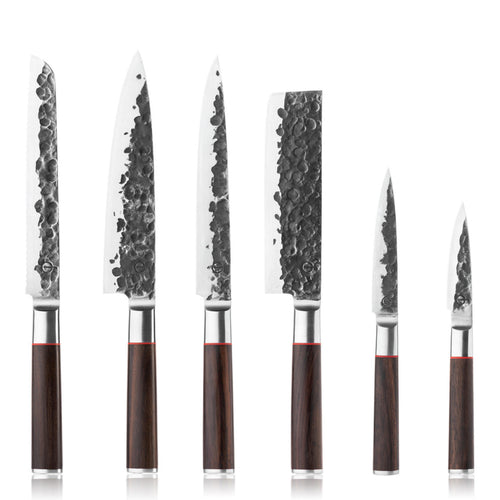
- Sebra: A striking series with a dark wooden handle that provides a chic look and distinguishes it from the rest.
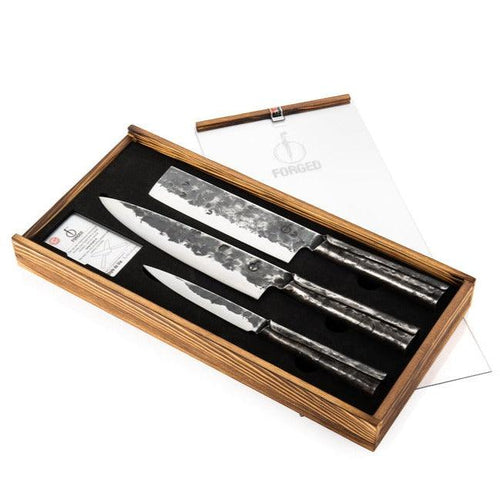
- Brute: This robust series has an open bolster and an unpolished blade, leaving the forging visible.
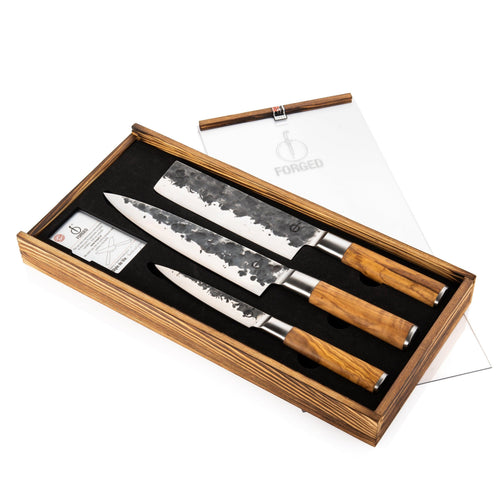
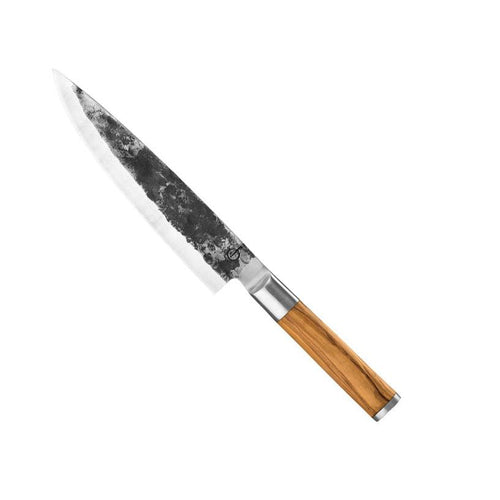
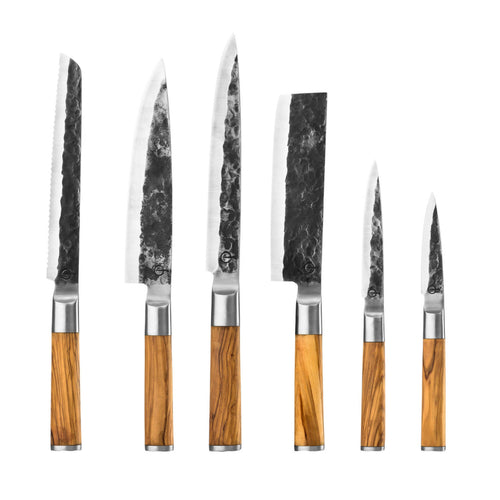
- Olive: This series owes its name to the natural olive wood handle, which gives the knives a warm and modern appearance.
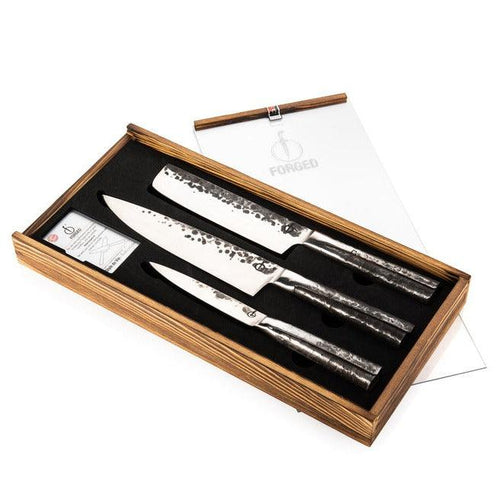
- Intense: With its subtly forged accents and extra polished finish, this series has a calm appearance.
- Katai: Waves were the inspiration for creating this series. This is reflected in the beautiful shape of the handle that seamlessly flows into the blade.

The choice is vast
Forged offers an extensive collection of knives. Due to differences in size, shape, and cutting edge, each type of knife has its own purpose and function. It naturally works best if you use the right knife for the right task. Below you will find all the different Forged knives:
- Chef's knife: The most versatile knife in the kitchen. The chef's knife is a true all-rounder, ideal for slicing meat, fish, or vegetables, among other things. Together with the carving fork, they form the perfect duo for carving.
- Cleaver: This knife is also called a Japanese vegetable knife; it is ideal for thinly slicing and chopping vegetables and herbs. Forged also has an Asian cleaver. This cleaver is ideal for slicing and chopping large, coarse pieces of meat and vegetables.
- Bread knife: The long, serrated blade makes this knife suitable for slicing bread, quiche, or larger vegetables and fruits such as pumpkin, pineapple, or melon.
- Carving knife: Due to the long, narrow blade, a carving knife offers less resistance when slicing meat or fish.
- Utility knife: The smaller version of the chef's knife. The name says it all: generally in use and suitable for almost everything.
- Paring knife: A small, light knife with a narrow blade. This makes the paring knife ideal for small, practical cutting tasks such as peeling fruits and vegetables.
- Santoku knife: The Japanese version of the chef's knife. Santoku means 'three virtues' and refers to its three functions: slicing, dicing, and mincing.
- Steak knife: A good piece of meat should be cut with a steak knife. The smooth blade cuts through the meat without tearing fibers.
- Boning knife: This knife is specially designed for boning meat and poultry.
- Butcher's knife: Ideal for cutting nice, straight slices of meat in one go.
- Fillet knife: You can learn to fillet! The thin and flexible blade makes this knife perfect for very precise filleting of fish.

Cleaning and maintenance
To enjoy your Forged knives for as long as possible, it is important to take good care of them. Use the knives for their intended purpose and always cut on a wooden or plastic cutting board.
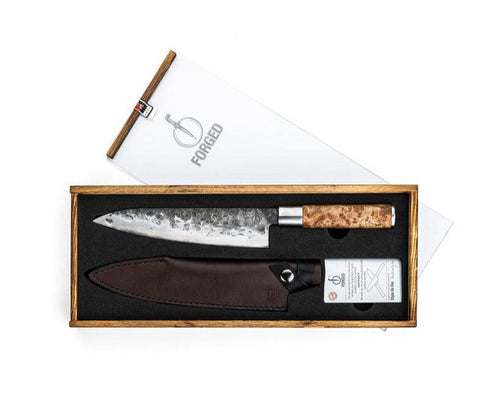
Clean your knife immediately after use with warm water and a little dish soap. Then dry them thoroughly to prevent rust. Forged knives, like almost all knives, should not be put in the dishwasher! Always store your knives safely after cleaning in their matching leather sheath or hang them on a knife magnet.
Do you have a knife with a wooden handle? Then grease it occasionally with, for example, almond or grapeseed oil. If you do not plan to use a knife for a longer period, it is wise to lightly grease the blade as well. You can do this with, for example, Ballistol or peanut oil. Ballistol oil also works well to remove rust spots.

Unfortunately, even the best knives become dull with use. For interim maintenance, use a honing steel. This does not sharpen your knife but ensures that the burrs on the cutting edge are aligned correctly again, making your knife sharp. If you can no longer sharpen your knife with a honing steel, it's time to sharpen it. This involves removing a small layer from your knife. Read here how to sharpen your knives at home or use our sharpening service.
Hopefully, after reading this article, you are a bit wiser. If you have any questions or comments, please do not hesitate to contact us. Happy cutting! 🙌