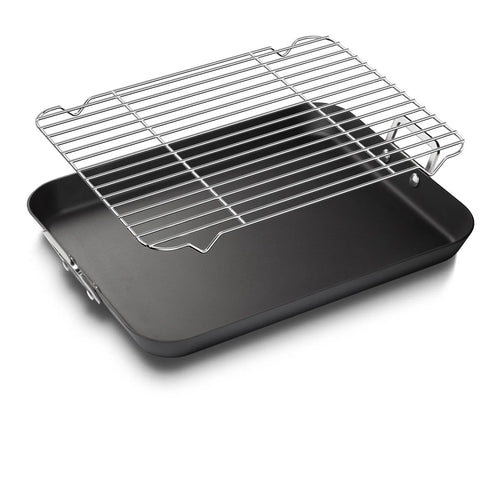
Roasting pans

A roasting pan is every home chef's secret weapon. Whether you're making pulled pork, indirectly cooking a whole chicken, or simmering vegetables in their own sauce, the right roasting pan makes all the difference. At Braadbaas, you'll find roasting pans made of stainless steel, sheet metal, and cast iron. We have roasting pans suitable for induction, gas, oven, kamado, kettle barbecue, gas barbecue, or smoker. Browse our selection and find the roasting pan that suits your cooking and barbecuing style.

Read blog

Cast iron pans

A heavy and durable material, resistant to high temperatures. The pan lasts for generations. These pans don't warp and are oven-safe. Heating up and cooling down takes a bit longer, but once hot it stays hot for a long time. Don't wash the pan in the dishwasher.

Carbon steel pans

Lighter than cast iron and they heat up faster. These pans are seasoned to create a non-stick layer. Warm the pan up after washing to dry it completely. This prevents rust.

Stainless steel pans

Stainless steel is very light and doesn't rust. These pans are also dishwasher-safe. They can withstand high temperatures but cool down quickly.

Copper pans

These pans don't just look stylish, they're also very durable. Good copper unfortunately doesn't come cheap, but the quality is fantastic. Working on professional dishes like sauces, jam or risotto where you need perfect temperature control? Then the copper pan is the perfect choice.

Aluminium pans

At a lower price you give up some quality, but they're very pleasant to use. They're light pans that are easy to clean. They have excellent heat conduction and are therefore ready to use quickly.

Filter

Sort
Price
to
Brand
Product type
Series
Type backing layer
Color
Suitable for Induction

What you need to know about Roasting pans

A roasting pan is a shallow, heat-resistant dish that you use on the BBQ or in the oven to cook food indirectly. You place it next to the heat source, not directly above it, so that heat circulates around it like in an oven. Roasting pans come in various materials (stainless steel, cast iron, sheet metal, enamel), sizes, and designs. They collect meat juices, catch dripping fat, and allow you to add extra flavor to your dish with broth, beer, or wine.

Buying a roasting pan - what should I look for?

Pay attention to three things: material, size, and compatibility with your heat source. Choose a roasting pan that is at least 2-3 cm smaller than the inner diameter of your BBQ, so that air can flow around it. A model with a lid gives you more control over heat and moisture. Also, check if the roasting pan is oven-safe if you want to use it for multiple purposes. Most stainless steel and cast iron models are and can also be used on induction hobs for searing.

Which roasting pan should I choose?

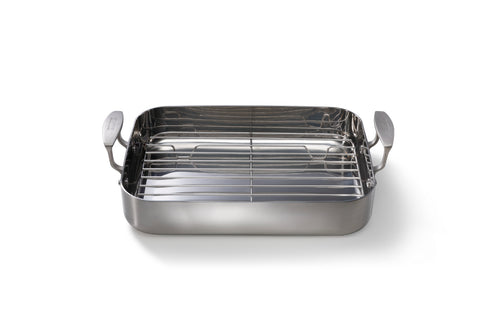
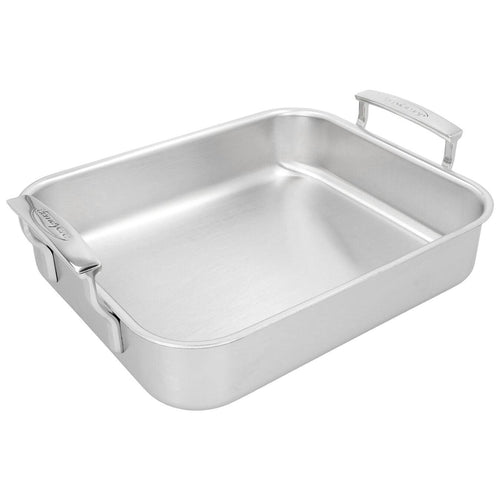
Stainless steel roasting pan

For the versatile BBQ enthusiast. Stainless steel is light, robust, and resistant to high temperatures. A stainless steel roasting pan heats up quickly, is easy to clean, and almost always dishwasher-safe. It requires little maintenance. This is the most versatile choice: suitable for the BBQ, the oven, and as a drip tray under your meat.

Cast iron roasting pan

For the slow & low lover. Cast iron absorbs heat slowly but then retains it exceptionally well. This makes it the ideal material for long, slow preparations where you want everything to cook evenly from inside to out. A cast iron roasting pan also gives meat a beautiful crust. After use, rinse, dry, andoil it, and it will last a lifetime.

Sheet metal roasting pan

For professional use. Sheet metal is thin, light, and heats up incredibly fast, making it perfect for the kitchen where time is money. A sheet metal roasting pan reacts quickly to temperature changes, which is useful when you want to adjust the heat while grilling. The material is sturdy, resistant to high temperatures, and only gets better with use. Just like a cast iron pan, sheet metal builds up a natural patina that prevents food from sticking. Drying and oiling it after use is all you need.
What can I cook in a roasting pan?

The possibilities are endless. Think pulled pork, whole chicken, lamb shoulder, spare ribs, pork belly or a roast beef, anything that benefits from slow cooking in its own juices. But you can also perfectly prepare vegetables, potatoes, fish, and even sauces and gravies in a roasting pan. In short: anything you would normally make in an oven dish, you can also prepare in a roasting pan.

What are the best roasting pans?

The best roasting pan is the one that suits your BBQ and your cooking style. For most people, a good quality stainless steel roasting pan is the smartest choice: versatile, durable, and easy to use. Are you a true low-and-slow fan who regularly prepares large cuts of meat? Then cast iron is the best investment. Whatever you choose, pay attention to a sturdy construction, well-fitting handles, and a size that fits your BBQ or oven.

Frequently asked questions

  • What is a roasting pan and what do you use it for on the BBQ?

    A roasting tray is a shallow, heat-resistant pan made of stainless steel, cast iron, sheet metal, or enamel, which you place on the barbecue to indirectly cook meat, vegetables, or fish. You place the roasting tray next to or well above the heat source, not directly on it, so that the food cooks by surrounding hot air (similar to an oven). Roasting trays are also used to collect dripping fat, keep your grill clean, and to prepare sauces or gravy directly in the pan.

  • Which material is best: stainless steel, cast iron, or enamel?

    Stainless steel is lightweight, durable, easy to clean, and low maintenance. It's the most versatile choice for most home chefs. Cast iron retains heat best and is ideal for low-and-slow cooking, but it's heavier and requires a bit more maintenance. Carbon steel is lighter and heats up quickly, but like cast iron, it requires maintenance. Enamelled cast iron is easy to clean but less durable and less suitable for direct high flames. Do you want maximum versatility? Choose stainless steel. Do you want the best results for long cooking times? Choose cast iron or carbon steel.

  • Does a roasting pan fit on all types of barbecues?

    Almost any roasting pan will fit on a kettle barbecue, gas barbecue, or kamado, provided the size is correct. For a kamado, pay attention to the diameter of the grate: a medium 38 cm kamado has a usable surface area of approximately 33 x 33 cm. Choose a roasting pan that is at least 2-3 cm smaller than the inner diameter of your BBQ, so that air can circulate around it for indirect heat. If you're going to use the roasting pan in the oven, make sure you leave enough space on both sides to firmly grip the roasting pan with heat-resistant gloves.

  • How do I use a roasting pan for indirect grilling?

    Light the BBQ and direct the heat source to the sides, or use a deflector plate in a kamado. Place the roasting pan in the middle of the grate, not over direct flame. Optionally, add a splash of broth, beer, or apple juice for extra flavor and moisture. Close the BBQ lid and regulate the temperature to 120-160 °C for low-and-slow, 180-200 °C for faster preparations. Periodically check the liquid and refill if necessary.

  • Can I also use a roasting pan in a regular oven?

    Yes, you can. Most stainless steel or cast iron roasting pans are fully oven-safe. However, check the maximum temperature resistance of the model you are purchasing. Roasting pans with plastic handles are sometimes only oven-safe up to 200-220 °C. Stainless steel and cast iron without plastic parts are generally resistant to 300 °C or higher.

  • How do I clean a roasting pan after use?

    Briefly soak a stainless steel roasting pan in hot water with dish soap; most are also dishwasher-safe. Never wash cast iron in the dishwasher or use aggressive cleaning agents: rinse with hot water, dry immediately, and rub with a thin layer of oil to prevent rust. Clean enamel with a soft sponge, without abrasive cleaners. For stubborn burnt-on food, let it soak overnight in water with baking soda. Find more tips in our knowledge blog on pan maintenance.

  • What is the difference between a roasting pan and a Dutch Oven?

    A roasting pan is relatively shallow (5-10 cm) and is used for open cooking or with a fitted lid. A Dutch Oven is a heavy, deep cast-iron pot with a tightly fitting lid, intended for cooking where you fully enclose meat or stew. The roasting pan is more versatile for BBQ use – collecting drippings, indirect grilling, and making sauces. The Dutch Oven is better for stews and soups.

  • Which roasting pan is best for a kamado?

    For a kamado, stainless steel or cast iron is most suitable due to the high temperatures a kamado reaches. Always use a deflector plate to create indirect heat. A roasting pan with a lid is less necessary with a kamado, as the kamado itself retains heat very well. An enameled roasting pan can often also be used on a kamado, but be aware that the color may change due to smoke development in your kamado.