A ceramic non-stick pan is the ideal choice for those who want to cook PFAS-free and with little fat. However, cooking with ceramic is slightly different from cooking in a classic Teflon pan, and that's where many kitchens go wrong. In this guide, you'll learn everything: from the very first use to daily cooking on induction or gas, cleaning, storage, and the mistakes that quietly ruin your pan. Straight from the practice of our store and webshop, so you can enjoy your pan for years to come.
- What is a ceramic non-stick coating?
- First use: how to start properly
- Daily use: temperature is everything
- Which oil or butter to use (and which not to)
- Ceramic cooking on induction
- Ceramic cooking on gas
- Preventing warping
- The right kitchen utensils
- Daily cleaning in 4 steps
- Is your pan suddenly sticking? How to make it like new again
- Why the dishwasher is not a good idea
- Storing without scratches
- Pay attention to the rim: bare aluminium or fully coated
- The 8 most common mistakes
- How long does a ceramic coating last?
- Frequently asked questions
What is a ceramic non-stick coating?
A ceramic non-stick coating is a smooth, glass-like coating based on silicon dioxide, a mineral extracted from sand. Through the so-called sol-gel process, this mineral is converted into a kind of 'liquid glass', sprayed in thin layers onto the pan, and cured in the oven to a hard, heat-resistant layer. No PFAS is used; this is also confirmed by the Dutch government. Well-known examples include Thermolon from GreenPan and Ceraforce from Demeyere.
The difference with Teflon (PTFE)
Teflon is a plastic coating with fluorine compounds (PFAS); ceramic is an inorganic, mineral material. This difference is noticeable in practice:
| Ceramic (sol-gel) | Teflon (PTFE) | |
|---|---|---|
| PFAS | No, PFAS-free produced | Yes, PTFE is a PFAS |
| Hardness | Very hard, more scratch-resistant | Softer, scratches faster |
| Heat behavior | Heats up quickly, little power needed | More forgiving at too high heat |
| In case of overheating | No toxic fumes, but permanent damage to non-stick properties | Above ±260°C, harmful fumes can be produced |
| Lifespan of non-stick properties | Shorter, requires careful use | Generally longer |
In short: ceramic is the healthier and harder coating, but it is less forgiving. If you treat it well, it will cook like a dream for years.
And what about stainless steel, carbon steel and cast iron?
Very briefly, because these pans deserve their own story. A stainless steel pan has no coating at all: it can withstand high temperatures, metal utensils and the dishwasher, and lasts for decades. Cooking without sticking is mainly a matter of practice. You can read further on why stainless steel and ceramic make such a strong combination.
Carbon steel and cast iron also have no factory coating, but build up a natural non-stick layer through seasoning with oil, which improves over the years. These pans can get glowing hot and are therefore perfect for steaks, stir-frying and barbecuing. Cast iron is heavy and retains heat for an extremely long time; carbon steel is lighter and reacts faster to your hob. Both require a small maintenance ritual: good drying and occasional oiling. Of this list, the ceramic pan is the easiest entry: direct non-stick, without technique or seasoning, but with a limited lifespan and always on moderate heat. Want to know more? Read our blog about pan materials.

First use: how to start properly
A new ceramic pan does not need to be seasoned or ‘broken in’ like cast iron. The first use is simple:
- Remove all packaging, stickers, and labels. Remove glue residue with a little warm water.
- Wash the pan with warm water and a mild dish soap. This removes production dust and any residue from the factory.
- Rinse thoroughly and dry the pan carefully with a soft (tea) towel.
That's all. Oiling or seasoning is not necessary; your pan is immediately ready for use.
 Demeyere Frying Pan 'Alu Pro 5 Ceraforce'
from
68,-
89,00
Demeyere Frying Pan 'Alu Pro 5 Ceraforce'
from
68,-
89,00
 Greenpan Frying Pan 'Geneva'
from
42,90
49,90
Greenpan Frying Pan 'Geneva'
from
42,90
49,90
 Greenpan Frying Pan 'Barcelona Pro'
from
64,90
89,90
Greenpan Frying Pan 'Barcelona Pro'
from
64,90
89,90
Daily use: temperature is everything
The golden rule: use a ceramic pan on low to medium heat. Always. Ceramic conducts heat so efficiently that your pan will get hot enough to sear a steak at half power. Here’s how to do it right:
- Heat the pan gently, at a maximum of 80% of its power.
- Then add your fat and turn the heat down to 50 to 60% once the pan is up to temperature. On powerful induction hobs, like those from Bora, it can often be set even lower.
- Cook on medium heat; that is more than enough. The material of the pan determines the final temperature, not the setting of your hob.
- Never leave an empty pan on a hot cooking zone: the pan cannot dissipate its heat and will be irreversibly damaged.
Why so strict? Above ±230°C, the non-stick properties of a ceramic layer are irreversibly damaged. The good news for safety: unlike Teflon, no toxic fumes are released if it accidentally gets too hot. But your non-stick coating will have quietly deteriorated a bit. Cooking too hot is the number one cause of death for ceramic pans.
Why a more expensive pan reacts differently than a cheap one
The biggest difference between a premium pan and a budget pan is not in the coating, but in the base. A thick base (like the 5 mm thick aluminum body of the Demeyere Alu Pro 5) takes a while to heat up. This requires a little more patience, but all that mass stores heat and distributes it evenly over the entire cooking surface. Once hot, the power can be significantly reduced, and the pan will maintain its temperature, even when you add cold ingredients.
A thin, cheap pan, on the other hand, heats up very quickly but does not retain that heat. To keep cooking, the power must remain continuously high. The result: a temperature that fluctuates wildly, hot spots in the middle, and fat that burns faster. Precisely the things a ceramic coating cannot withstand. So a thicker base is not a luxury, but direct protection for your non-stick coating.
Which oil or butter to use (and which not to)
Always cook with a little fat. Oil or butter distributes heat, adds flavour, and protects the coating. The right choice makes the difference between years of enjoyment and a pan that sticks after three months.
- Sunflower oil, peanut oil (±230°C), corn oil
- Avocado oil, rapeseed oil, grapeseed oil
- Ghee (clarified butter) and butter or margarine at moderate temperatures
❌ Do not use
- Olive oil, and certainly extra virgin. It burns at around 150 to 175°C and leaves a sticky, invisible film of fat that bakes onto your coating. Olive oil is delicious over a salad, but it's not a cooking oil for your ceramic pan.
- Cooking spray or spray oil, in any form. The micro-droplets heat up incredibly quickly, burn, and build up a layer of carbonized fat.
- Unrefined or cold-pressed oils in general: low smoke point, so they burn quickly.
This burnt fat is, by the way, the main reason why ceramic pans 'suddenly' start sticking. More on that later.
Ceramic cooking on induction
Induction and ceramic are a great combination, but also a risky one. Induction is powerful and heats your pan in seconds; faster than you realize, and faster than the coating likes. Stick to these rules:
- Never use the boost function. It's meant to boil water quickly, not to rush a coated pan.
- Check your hob's manual for base diameters. It precisely indicates which zones are suitable for which pan diameters. A coil that is too small under a pan that is too large will only heat the center of the base and can cause it to deform; a zone that is too large will heat the rim. Maintain a margin of approximately 15% between the diameter of the zone and that of the pan base.
- Heat gradually: maximum 80% of the power, and reduce to 50 to 60% once the pan is hot. On powerful hobs like Bora, it can often be set even lower.
- Lift the pan when moving it instead of sliding. That prevents scratches on your hob and on your pan base.
Do you want to protect your induction hob from scratches, stains, and sliding pans? Then place a silicone induction protector (induction mat) between the pan and the hob. The heat simply passes through, as induction heats the pan and not the hob.
 Combekk Induction Mat / Induction Protectors - 3 pcs.
19,99
Combekk Induction Mat / Induction Protectors - 3 pcs.
19,99
 Combekk Induction Mat / Induction Protectors - 4 pcs.
24,95
Combekk Induction Mat / Induction Protectors - 4 pcs.
24,95
Ceramic cooking on gas
On gas, you have more direct control, but one thing often goes wrong: a flame that is too large. Adjust the flame so that it only touches the bottom of the pan and does not rise up along the sides. Flames along the rim overheat the coating precisely at the most vulnerable spot and scorch the outside of your pan. Otherwise, the same rules apply as always: moderate heat, gentle heating, and make sure the handle is not hanging over a burner.
Preventing warping
A warped bottom is irreparable, and almost always preventable. A pan that is no longer flat wobbles, causes oil to run to the rim, heats unevenly, and sometimes isn't even properly recognized on induction hobs. Independent durability tests show that almost every pan is susceptible to this, even a good one. Here's how to keep your bottom flat:
- Never put a hot pan under cold water. This is the main cause. The thermal shock causes the metal to contract faster than it can handle, and the bottom warps. Let the pan cool down first.
- No boost and no full power on a cold pan. Heating too quickly causes the metal to expand unevenly, especially on powerful induction zones.
- Never heat an empty pan on high heat; without contents, the temperature will shoot up within a minute.
- Use a cooking zone that matches the bottom diameter. Check your hob's manual to see which diameters work on which zones and keep a margin of about 15%. A coil that is too small under a pan that is too large will only heat the center and can cause the bottom to deform. The same applies to the flame on gas.
- Choose a pan with a thick, sturdy bottom. A heavy plate bottom is much more dimensionally stable than a thin budget pan.
If your pan has warped due to a heat shock, it will often start to stick, and this is outside the warranty. Prevention is truly the only remedy here.
The right kitchen utensils
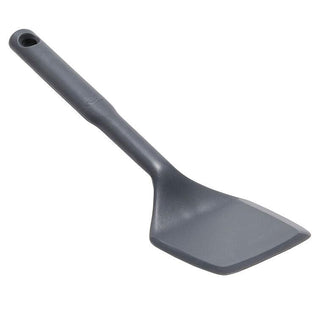
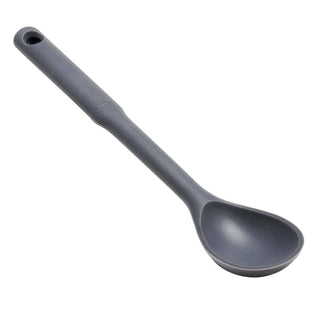
Use only kitchen utensils made of wood, silicone, or plastic. Metal spatulas, whisks, and spoons are a no-go: they scratch the coating, and every scratch is the beginning of the end. Also, poking with a fork or, the biggest sin, cutting with a knife inside the pan is out of the question; no non-stick coating can withstand that. A good silicone spatula, for example from OXO Good Grips, is heat-resistant, gentle on your coating, and lasts for years. And if you have a pan with a fully coated rim: do not tap your spatula on the rim of the pan either.
Daily cleaning in 4 steps
Good news: daily maintenance of a ceramic pan is minimal, if you do it properly every time. And 'properly' is more important than you might think, because a half-cleaned pan is the stealth route to baked-on fat.
- Let the pan cool down first. Never directly under the (cold) tap: thermal shock damages the coating and warps the base.
- Wipe away excess fat with kitchen paper. This prevents it from going down your drain and makes the pan easier to clean.
- Wash with warm water, mild dish soap, and a soft sponge or dish brush, and scrub until the pan is sparkling clean again. No steel wool and no aggressive cleaners.
- Dry the pan immediately and thoroughly with a soft cloth. This prevents limescale and water stains and dull spots.
Sparkling clean is the norm. Every day. Do you still see dull spots or a brownish haze on the coating after washing? That's not wear and tear, that's burnt fat. And it absolutely has to come off: scrub those spots away with your sponge and dish soap, you can use some force. If you start cooking again with such stains in the pan, they will carbonize further and harden layer by layer, until at some point they become impossible to remove. The result: a pan that sticks and is irreparably damaged, and that also falls outside the warranty. Two minutes of good scrubbing a day prevents all of this.
Is your pan suddenly sticking? How to make it like new again
If a ceramic pan 'suddenly' starts to stick, the coating is almost never broken: there is a layer of burnt (carbonized) fat on it. This layer is formed by olive oil or spray oil, too high heat, and too gentle washing. You are no longer cooking on your coating, but on a sticky film of fat residues. Here's how to remove it:
- Soak off the residue. Fill the pan with a layer of water and let it gently come to a boil for a few minutes. Turn off the heat and let it sit for a few hours (or overnight). Stubborn? Bring a little vinegar with a generous tablespoon of baking soda to a boil, let it simmer for 10 minutes, and then let it soak.
- Go over it with a melamine sponge (magic eraser) or the soft side of your sponge, with warm water and dish soap. The softened grease film will now release.
- Wash, dry, and perform the milk test. Does the milk run off smoothly? Done. If some remains, repeat the treatment; heavily baked-on fat sometimes needs 2 or 3 rounds.
- Last resort: if the stains really won't disappear, you may carefully use the hard side of a regular scourer on the stubborn spots once. Never use steel wool or metal, and don't make it a habit. It's an emergency measure, not a maintenance routine.
Dull or brown spots on the outside? Make a paste of baking soda and water, rub it on with kitchen paper, let it soak in for a while, and then wash it off.
Why the dishwasher is not a good idea
Many boxes say 'dishwasher safe', yet we advise against it. The non-stick performance of any ceramic coating slowly diminishes with repeated dishwashing, due to the aggressive salts, bleach, and phosphates in dishwasher detergent. In addition:
- The dishwasher still doesn't remove baked-on grease; precisely the problem you needed it for.
- The steel racks and steel cutlery release micro-steel during washing, and these tiny steel particles can cause small scratches on the coating.
- If you have a pan with a bare aluminum rim, it will guaranteed dull in the dishwasher.
Hand washing takes 30 seconds and easily doubles the lifespan of your pan. So just do it.
Storing without scratches
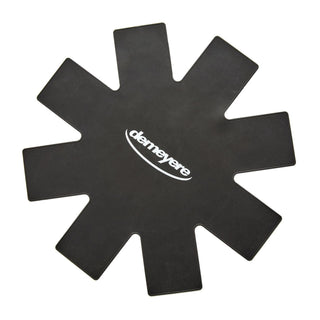
Most scratches don't occur during cooking, but in the kitchen cabinet. Never stack your pans loosely inside each other: the bottom of one pan will rub against the coating of another, and the vulnerable rim will take the blows. Use pan protectors (soft silicone or felt inserts) or hang your pans. Store them dry and don't place heavy, sharp items on top. A small effort, a big difference.
Mind the rim: bare aluminum or fully coated
Something almost no one considers: the rim. With some pans, the coating stops just below the top rim, leaving a narrow strip of bare aluminum visible; with others, the ceramic layer extends all the way to the top. An extended rim looks sleeker and won't discolour, but it is more vulnerable: lids, spatulas, and other pans will land exactly on that rim, and every knock will directly impact the coating there. So be a little more careful and use pan protectors. A bare aluminum rim, on the other hand, can withstand a knock just fine, but may become dull over time. Neither is wrong: fully coated is more aesthetically pleasing, bare aluminum is more robust. If you're unsure which your pan has, ask us.
A scratch or dent? Don't panic
No matter how careful you are, a scratch or dent can always happen: a lid that lands a bit too hard, a metal spoon accidentally ending up in the pan, or a pan rubbing against another in the cabinet. The good news: unlike Teflon, damage to a ceramic coating is not harmful. No harmful substances are released, and you can continue cooking with it for a long time. With careful use, the damage will not crack or peel further. Please note that scratches and dents are not covered by the warranty; only if the damage is present out of the box will we, of course, resolve it for you. So check your new pan immediately upon receipt.
The 8 most common mistakes (and how to avoid them)
- Cooking too hot. Number one cause of death. Ceramic only needs medium heat; turn that knob down.
- Cooking with olive oil or cooking spray. Low smoke point, burns, bakes in. Choose a neutral oil with a high smoke point.
- Putting the hot pan under cold water. Thermal shock: warped bottom, damaged coating. Let it cool first.
- A cooking zone that doesn't match your pan. A coil that's too small under a pan that's too large will only heat the center and can deform the bottom. Check your hob's manual and allow for about a 15% margin.
- Putting the pan in the dishwasher. Aggressive salts and phosphates erode the non-stick properties a little further with each wash.
- Using metal utensils or cutting in the pan. Wood and silicone, always. And don't tap your spatula on the rim.
- Not washing thoroughly enough. An invisible film of grease remains, burns during the next cooking session, and so layer after layer of charred grease builds up. Until 'suddenly' everything sticks. When in doubt, do the milk test.
-
Stacking pans loosely. Scratches guaranteed. Pan protectors cost a few euros, a new pan a lot more.
How long does a ceramic non-stick coating last?
A ceramic non-stick coating lasts about 2 to 5 years. Shorter with incorrect use, longer with perfect use. You now know the biggest life-killers: overheating, wrong fats, the dishwasher, metal, and thermal shocks. Those who follow the rules in this guide will therefore be on the good side of that range.
Good to know: if the coating gets damaged or a piece comes off, it is not harmful to your health with a ceramic pan. After all, it contains no PFAS; this is also confirmed by the Dutch government. However, food will stick faster in damaged areas (and you don't want burnt food either), so you should simply replace a worn-out pan. Does your pan stick even though the coating still looks intact? Chances are it's baked-on grease: clean it first, then consider a new one. More general maintenance tips can be found in our maintenance guide.
Boss's tip: Stainless steel as a workhorse, ceramic for delicate tasks
Do you want a pan that lasts for decades? Then look at stainless steel. A stainless steel pan has no non-stick coating that can wear out, can withstand high temperatures, metal utensils, and the dishwasher. Cooking without sticking in stainless steel just takes a bit of practice; we explain the technique in this blog. The best combination for home, in our opinion, is therefore simple: use stainless steel for almost everything and only take out the ceramic pan for very delicate ingredients, such as an egg, fish, or pancakes. This way, stainless steel is your workhorse, you use your ceramic pan much less often, and it will therefore last much longer.
Frequently Asked Questions
Do I need to grease a ceramic pan before first use?
No. Washing with warm water and mild dish soap, rinsing, and drying thoroughly is sufficient. A ceramic pan does not need to be seasoned like cast iron.
Which setting should I use on induction?
Heat to a maximum of 80% power and reduce to 50 to 60% once the pan is up to temperature; on powerful hobs like Bora, it can often be even lower. Never use the boost function and choose a zone that matches the bottom diameter of your pan (check the manual and allow for about a 15% margin).
Can a ceramic pan go in the dishwasher?
Many pans are technically dishwasher safe, but we always recommend handwashing: the aggressive salts and phosphates in dishwasher detergent will further reduce the non-stick performance with each wash.
Why is my ceramic pan suddenly sticking?
Almost always due to an invisible layer of burnt (carbonized) fat on the coating, caused by olive oil or spray oil, high heat, and not washing thoroughly enough. Soaking with water (possibly with baking soda and vinegar) and cleaning with a melamine sponge almost always solves it.
Is a damaged ceramic coating harmful?
No. A ceramic non-stick coating does not contain PFAS, so detached particles are not toxic. However, food will stick faster in damaged areas; it is therefore best to replace a truly worn-out pan.
Which oil is best for a ceramic pan?
A neutral oil with a high smoke point: sunflower oil, peanut oil, corn oil, avocado oil, or rapeseed oil. Butter and ghee can also be used at moderate temperatures. Avoid (extra virgin) olive oil and cooking spray: they burn quickly and bake into the coating.
How long does a ceramic non-stick coating last?
A minimum of 2 to 5 years. Shorter with incorrect use, longer with perfect use: gentle heating, the right fats, handwashing, and pan protectors significantly extend the lifespan, while high heat and the dishwasher quickly destroy the non-stick performance.
Can a ceramic pan go in the oven?
That depends on the pan and mainly on the handle: stainless steel handles can often withstand up to 220 to 300°C, plastic much less, and wood not at all. Always check the specifications of your specific pan.
Conclusion: ceramic cooking is easy if you know the rules
A ceramic non-stick coating does not require complicated maintenance, but it does require consistently good behaviour: gentle heating to a maximum of 80% power, cooking at 50 to 60%, a neutral oil with a high smoke point, soft utensils, handwashing with a thorough grease check, and storing with pan protectors. If you do that, you will cook PFAS-free for years, with less fat and without sticking. Like a true cooking boss.
Ready for ceramic? View our complete collection of pans with ceramic non-stick coating, or read our in-depth article about the Demeyere Alu Pro 5 Ceraforce.
 Greenpan Skillet 'Barcelona Pro'
from
109,90
144,90
Greenpan Skillet 'Barcelona Pro'
from
109,90
144,90
 Greenpan Crêpe Pan Ø28cm 'Barcelona Pro'
79,-
99,90
Greenpan Crêpe Pan Ø28cm 'Barcelona Pro'
79,-
99,90
 Greenpan Wok 'Geneva' Ø28cm / 3.6L
64,90
79,90
Greenpan Wok 'Geneva' Ø28cm / 3.6L
64,90
79,90
Questions about your ceramic pan? Send us a message or visit our store in Maassluis. We are happy to help! ✌🏼