Cast iron pans
Cast iron without a non-stick coating
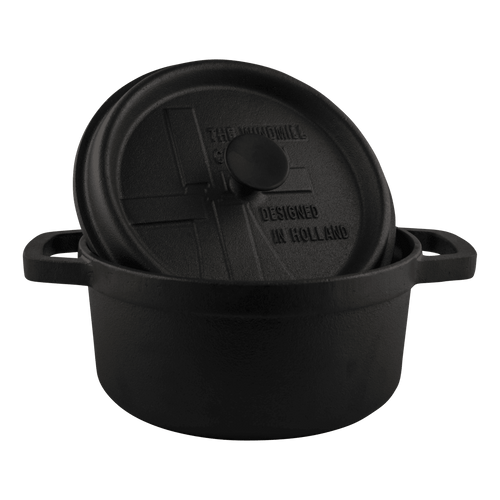
When you buy cast iron pans, you can be sure they will last a lifetime. It is a heavy and durable material, resistant to high temperatures. The pans do not warp and are usually oven-safe. Heating up and cooling down may take a little longer with these pans, but with proper care and a little love, these pans will last for generations. Seasoning them with oil before first use is a good idea, as it creates your own non-stick coating. It is better not to put these pans in the dishwasher, but simply rinse them thoroughly.
-
Extremely strong and resistant to high temperatures
-
Can be used with metal utensils
-
Even heat distribution and excellent heat retention
-
As fats build up in the pan, a natural non-stick coating forms that improves with use.
-
Requires regular maintenance and needs to be re-seasoned over time
-
Heavier than other materials
-
Not suitable for acidic foods

Enamelled cast iron
Some cast iron pans have an enamelled non-stick coating. This layer not only provides a beautiful appearance but also gives your pan an extremely sturdy and healthy non-stick coating. Le Creuset is known as a brand that makes some of the best cast iron pans with an enamel coating.
-
Does not need to be seasoned and is just as strong
-
Very easy to clean
-
Enamel can chip and flake with careless use or cleaning
Susceptible to cracks and scratches from impacts or drops. Be careful with metal utensils.
Carbon steel pans
Carbon steel pans are very similar to cast iron pans. However, they are lighter and heat up faster. These pans also need to be seasoned to form their own non-stick coating. To prevent them from rusting, it is advisable to heat the pans after washing so that they are completely dry.
-
Relatively light in weight
-
Can be used with metal utensils
-
No non-stick coating. So, healthy and long-lasting!
-
Often a thinner pan. It heats up quickly and provides good temperature control
-
Like cast iron, this pan needs to be seasoned
-
Loses its non-stick properties when using soap. Must be re-seasoned afterward.
-
Susceptible to rust and corrosion
-
Not suitable for acidic foods
Pans flying off the shelves...
Stainless steel pans
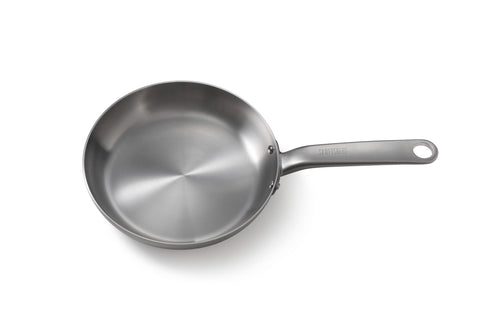
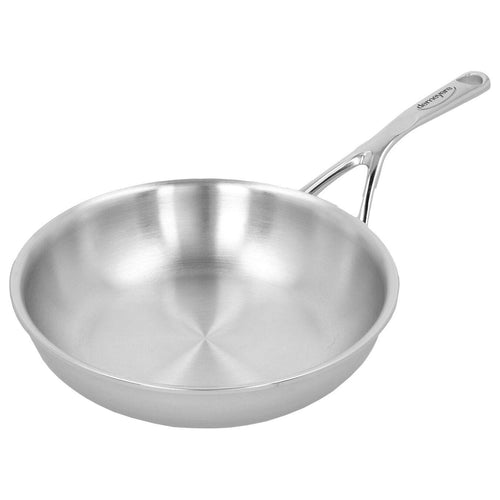
Stainless steel pans are light and do not rust. The big advantage is that they are dishwasher-safe. In addition, they are resistant to high temperatures and cool down quickly. Like cast iron and carbon steel pans, there is no unhealthy synthetic non-stick coating. With proper use, this pan will provide a lifetime of cooking pleasure.
-
Resistant to scratches, dents, and rust
-
No non-stick coating. So, healthy and long-lasting!
-
No reaction with acidic foods
-
Can be used with metal utensils
-
Can be cleaned with soap and scouring pads
-
Perfect for high-temperature frying. Beautifully sears your meat and fish
-
Ingredients like an egg or meat will initially stick to the pan. Once a crust forms, it sears beautifully and your ingredient releases.

Copper pans
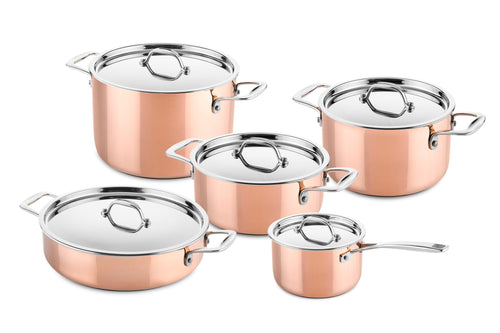
These pans not only look stylish, but they are also very durable. Good copper unfortunately does not mean cheaper, but the quality is fantastic. If you are working with professional dishes such as sauces, jam, and risotto where you need a perfect temperature, then the copper pan is the perfect choice. Heat is distributed over both the bottom and the sides of the pan.
-
Optimal heat conductivity
-
Perfect temperature control for your sauces
-
Looks beautiful
-
They are very expensive
-
Susceptible to scratches and dents
-
To keep them looking good, you need to polish the pan regularly
Aluminum pans with non-stick coating
Pans with a PTFE or ceramic non-stick coating often have an aluminum body. You don't have a guarantee that these pans will last a lifetime, but they are very practical to use. They are lighter pans that are easy to clean. They have good heat conductivity and are therefore quickly ready for use.
-
No food sticking and extremely easy to clean
-
You cook healthier because you need less cooking fat
-
Affordable and a large selection
-
If a PTFE non-stick coating wears out, it can be harmful to your health
-
They are vulnerable to scratches. Do not use metal kitchen utensils
-
PTFE pans are not sustainably made
When purchasing a new pan, the material is not the only important factor. In this blog, we guide you through our four-step plan to buy the perfect pans. Curious about what types of pans there are? Read about it in this blog!🍲