Stainless Steel
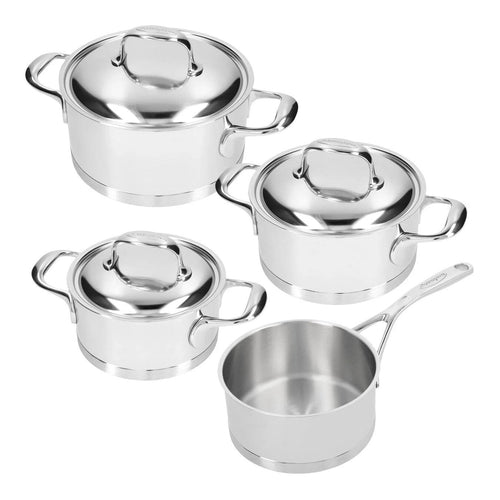
Stainless steel is an alloy primarily of iron with several additions, such as chromium and nickel. A stainless steel pan can truly last your entire life, but there are a few things you need to pay attention to.
-
Avoid thermal shock. Let the pan cool down after cooking and don't immediately set your induction hob to the highest setting. This prevents a warped bottom.
-
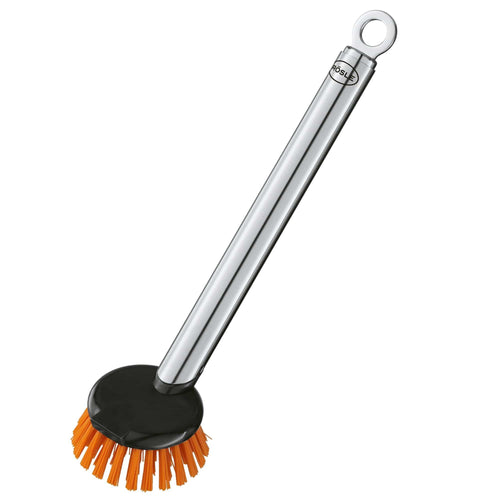
A dishwasher won't harm a stainless steel pan, but we would never advise doing it every day. Clean your pan with warm water, dish soap, and a dish brush or scratch-free scourer. Then dry your pan thoroughly.
-
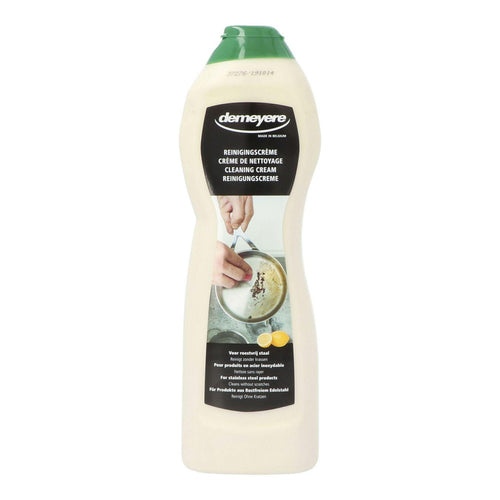
Most stains can be removed with some soapy water. For stubborn stains, let the pan soak in warm water with stainless steel cleaner. Then pour out the water and scrub vigorously with a scratch-free scourer.
-
Stubborn dirt or burn marks can be cleaned with baking soda. Heat a layer of water with a spoonful of baking soda and vinegar in your pan to form a paste. Scrub with a sponge and your pan will be as good as new!
-
Does your pan have white spots or limescale? Clean the pan with a 50/50 mixture of water and cleaning vinegar. You can even bring this to a boil. Afterwards, rinse the pan thoroughly with water.

Sheet steel and cast iron
Pans made of these materials, and without a non-stick coating, require the same maintenance. Over time, residual fat builds up a beautiful non-stick layer in your pan, almost comparable to a pan with a coated non-stick layer. A downside to this is that you should only clean the pan with warm water, not soap. Stubborn stains can be scrubbed away with a sponge or scrub pad. If you do want to give the pan a thorough clean, re-season it! Coat the pan with an oil resistant to high temperatures and place it in a hot oven for an hour. For more information, read the manufacturer's instructions.
-
A cast iron or sheet steel pan contains no chemical substances and is therefore very good for your health.
-
A well-maintained cast iron pan is ultimately the best pan you can have. But, not the easiest ;)
-
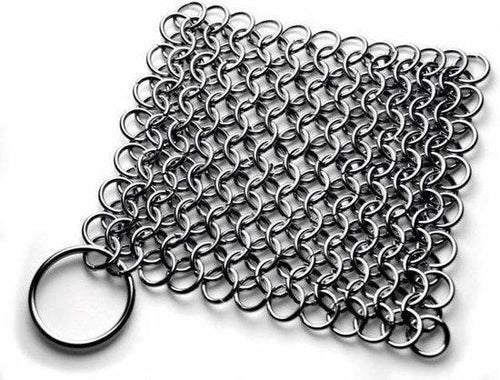
Never use soap and remove stubborn food residues with a scrub pad and hot water.
-
After cleaning, always place the pan on the stove briefly to dry it completely and quickly. This prevents rust!

Cast Iron with Enamel Coating
Enamel is melted glass applied as a layer to metal or pottery for protection. This layer makes the pan easy to clean and acts as a non-stick coating. An enamel layer is extremely strong but comes with a price tag. Be careful not to use metal utensils with an enamel layer, as these can damage the coating.
-
Enamel is extremely strong and provides a beautiful non-stick coating. It does come with a price tag.
-
Do not use steel kitchen utensils too often on an enamel coating.
-
Always check the warranty on your pan. This gives an indication of the quality of the enamel layer.

Ceramic non-stick coating
A healthy alternative to PFAS. This non-stick coating is created by a ceramic layer on the inside of the pan. This layer consists of ceramic and titanium. These pans contain no substances harmful to your health or the environment.
-
Do you want to get rid of PFAS and still have an easy non-stick coating? Then a ceramic layer is a good alternative.
-
You can cook with less fat because the pan itself is non-stick. That's healthy and delicious!
-
Although manufacturers may claim that a non-stick pan can go in the dishwasher, your pan will last much longer if you don't.
-
Check the maximum temperature the coating can withstand. Never let your pan get hotter than this. If you do, the coating will come off and your pan will be unusable.
-
A ceramic non-stick coating is delicate. Avoid thermal shocks and do not use steel kitchen utensils.
-
Let the pan cool down after use and wipe away most food residues so they don't stick to your pan.
-
Always check the warranty on your pan. This gives an indication of the quality of the ceramic layer.

Teflon non-stick coating
Teflon is a brand name for fluoropolymers, in other words, plastic. These are chemical compounds that are water, grease, dirt, and dust repellent. Teflon falls under PFAS, which are chemically produced substances and thus do not naturally occur in nature. If used incorrectly, these substances can be harmful to you.
-
Never leave the pan empty on the heat. At 260 degrees, the coating is severely damaged. With oil or food in the pan, it won't reach this temperature.
-
Birds are especially sensitive to the fumes. So keep them away.
-
Check the maximum temperature the coating can withstand. Never let your pan get hotter. If you do, the coating will come off and your pan will be unusable.
-
A PTFE layer is delicate. Avoid thermal shocks and do not use steel kitchen utensils. Never scrub the pan.
-
If it's not clearly stated that the pan is PFAS-free, or if it doesn't specify what's in the pan? Then there's a good chance PFAS is used.
-
Always check the warranty on your pan. This gives an indication of the quality of the PTFE layer.
-
Teflon is essentially the best non-stick coating there is, but unfortunately, it is not produced sustainably and has some disadvantages in use. More and more people are therefore moving away from coatings (stainless steel, sheet steel, or cast iron) or using a ceramic non-stick coating.
Copper
Copper is a naturally extracted substance and can be recognized by its pink-orange color.
Copper pans gleam at you. And besides looking beautiful, it is the best heat conductor and therefore excellent material for your pan.
-
Copper looks beautiful and has excellent heat conductivity.
-
Copper is toxic to us, which is why the inside of your pan is always stainless steel.
-
Always opt for a high-quality copper pan. Stainless steel must be of high quality so that it does not wear away and your food comes into contact with the copper.
-
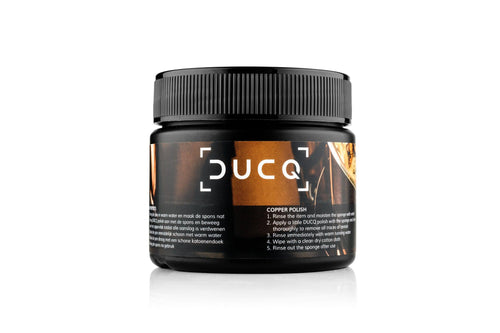
Copper can quickly become somewhat dull. Use copper polish to make the pan shine again.
Earthenware
Earthenware is made from loam or clay, often sourced from rivers. This clay is dried and fired, making it hard. Earthenware is often covered in a glaze layer to make it impermeable to moisture and give it a beautiful shine. This way, earthenware can also be decorated and acquire beautiful colors. An earthenware pan can be used for almost all ingredients, making it very versatile. Additionally, this material is easily dishwasher-safe, unlike other pans. However, ensure that you let the earthenware dry thoroughly before storing to prevent mold formation.

Extend the lifespan of your pans by cleaning them correctly. Are your pans due for replacement? In this blog, we help you with buying new pans. Home chefs ready, time to wash up! 🧼✨