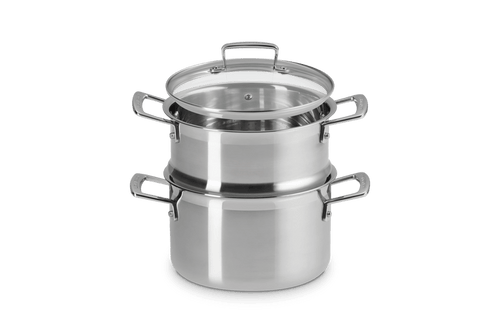
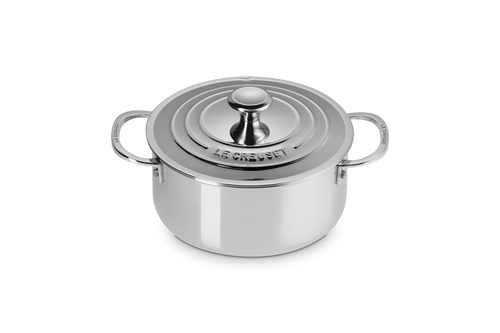
Saucepans

A good saucepan is the foundation of every kitchen. Whether you're cooking pasta for the family, preparing a large pot of soup, or serving vegetables and rice. Without the right saucepan, you won't get far. At Braadbaas, you'll find a carefully curated assortment of saucepans from top brands, in various materials, sizes, and designs. From a compact 16 cm saucepan for one person to a spacious 9-liter soup pot for large groups. At Braadbaas, there's always a model that suits your cooking style and family size.

The quality of a saucepan lies in the details: the thickness of the base, the material, heat distribution, and the finish. Do you choose stainless steel, cast iron, or a copper saucepan? Each material has its own advantages. At Braadbaas, we help you make the right choice.

Read blog

Cast iron pans

A heavy and durable material, resistant to high temperatures. The pan lasts for generations. These pans don't warp and are oven-safe. Heating up and cooling down takes a bit longer, but once hot it stays hot for a long time. Don't wash the pan in the dishwasher.

Carbon steel pans

Lighter than cast iron and they heat up faster. These pans are seasoned to create a non-stick layer. Warm the pan up after washing to dry it completely. This prevents rust.

Stainless steel pans

Stainless steel is very light and doesn't rust. These pans are also dishwasher-safe. They can withstand high temperatures but cool down quickly.

Copper pans

These pans don't just look stylish, they're also very durable. Good copper unfortunately doesn't come cheap, but the quality is fantastic. Working on professional dishes like sauces, jam or risotto where you need perfect temperature control? Then the copper pan is the perfect choice.

Aluminium pans

At a lower price you give up some quality, but they're very pleasant to use. They're light pans that are easy to clean. They have excellent heat conduction and are therefore ready to use quickly.

Filter

Sort
Price
to
Brand
Product type
Series
Type backing layer
Color
Suitable for Induction

What you need to know about Saucepans

A saucepan is the most used piece of kitchen equipment in the home, and choosing the right one makes a big difference in ease of cooking and lifespan. Most saucepans are made of stainless steel. This steel is strong, hygienic, and suitable for all heat sources, including induction. A pan with a thick, multi-layered bottom distributes heat evenly and prevents burning. The correct size depends on how many people you cook for: from 16 cm for one person to 24 cm or larger for a whole family. A saucepan set with multiple sizes is often the smartest and most economical choice.

If you opt for a saucepan with a non-stick coating, always check whether the coating is PFAS-free and PTFE-free. Ceramic and mineral coatings are healthier and more environmentally friendly and are becoming increasingly popular. As for maintenance, the same advice applies to every saucepan: preferably wash it by hand, avoid abrasive cleaners and metal kitchen utensils, and always let the pan cool down before washing it. This way, a good saucepan can last for decades.

Buying a saucepan - what to look for?

A saucepan seems like a simple purchase, but there are some important factors that make the difference between a pan that lasts twenty years and one that disappoints within a year.

Material

The basis of every good saucepan is the material. Stainless steelis the most popular choice due to its durability, hygiene, and sleek appearance. Ceramic saucepans are PFAS-free and environmentally friendly, but require a little more care in use.

Bottom construction

A good saucepan has a thick, multi-layered bottom - also called multi-ply or capsule bottom. This distributes heat evenly across the entire pan, prevents burning, and ensures energy-efficient cooking.

Heat source

Always check whether the saucepan is suitable for your hob. Do you cook on induction? Then choose a pan with a magnetic bottom. Most stainless steel and cast iron saucepans in the Braadbaas range are suitable for all heat sources, including induction, gas, electric, and ceramic.

Size

The correct size depends on how many people you regularly cook for. A pan of 18 to 20 cm is ideal for up to two people. For families of up to four people, a pan of 20 to 24 cm is the best choice. Do you cook for larger groups? Then a soup potof 24 cm or larger is indispensable.

Which saucepan will you choose?

Stainless steel saucepan

A stainless steel saucepanis one of the most durable and versatile choices for the kitchen. Stainless steel does not rust, discolour, or absorb odours, tastes, or bacteria, which makes it extremely hygienic for daily preparation of soups, pasta, vegetables, and sauces. Thanks to the multi-layered bottom with an aluminium or copper core, heat distributes quickly and evenly, which prevents burning and promotes energy-efficient cooking. In addition, a stainless steel saucepan is suitable for all heat sources, including induction.

A stainless steel saucepan is easy to maintain. Preferably wash it by hand with warm water and a soft sponge; this will keep the pan in top condition and it will last for decades. Stubborn burnt-on food can be easily removed by boiling some water in the pan and then scrubbing it clean. Avoid scouring pads and metal kitchen utensils to prevent scratches on the inside.

Ceramic saucepan

A ceramic saucepan is the ideal choice for those who want to cook consciously and healthily. The ceramic coating is completely PFAS-free and PTFE-free, which means that no harmful substances are released when heated. Food glides effortlessly off the smooth coating, so you hardly need any oil or butter. This not only benefits health but also ensures a pure, unadulterated taste without off-flavours that can sometimes occur with older coatings.

As for maintenance, a ceramic saucepan requires a careful approach. Always wash the pan by hand with warm water and a soft sponge; the dishwasher will eventually damage the coating and reduce its non-stick properties. Do not use metal kitchen utensils or scouring pads, as scratches will damage the ceramic layer. Also, never heat the pan empty on high heat, as extreme temperatures shorten the lifespan of the coating. Treat it with care and a ceramic saucepan will give you years of cooking pleasure.
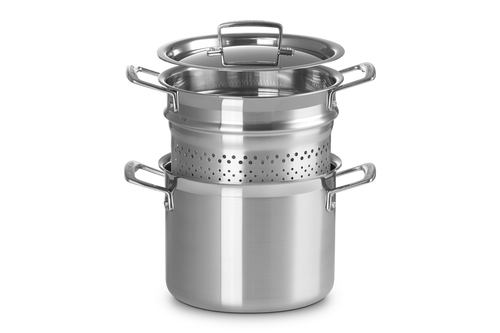
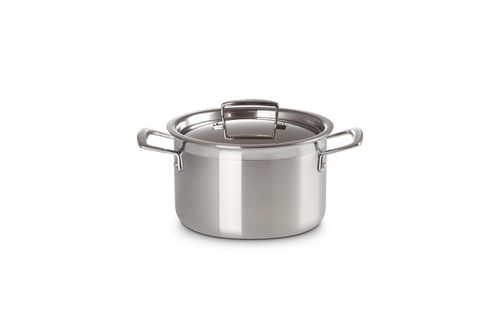
What can you cook in a saucepan?

A saucepan is more versatile than many people think. The most obvious uses are cooking potatoes, vegetables, rice, and pasta. But a saucepan is also perfect for making a rich broth, a large pot of soup, heating sauces, or preparing legumes such as lentils and chickpeas. With a steaming insert, you can even healthily steam vegetables and fish, without losing nutrients.

In addition, a saucepan is indispensable for sweet preparations. Think of making pudding, custard, hot chocolate, or homemade jam. The saucepan is also the perfect tool for poaching fruit, melting chocolate au bain-marie, or boiling eggs. In short, from a quick weekday meal to an elaborate dinner or a sweet dessert, the saucepan is always the foundation.

What is the best saucepan?

Do you want to complete your kitchen cabinet in one go? Then a saucepan set is the smartest choice. A set usually consists of two to five saucepans in ascending sizes, so you always have the right pan at hand, whether you're making a small sauce or cooking a large pot of pasta for the whole family.

A saucepan set also has an important financial advantage: individual pans are more expensive per piece than when you buy them as a set. Moreover, sets of the same brand and series are always well-matched in terms of material, base construction, and heat conductivity.

When choosing a set, pay attention to the composition: are all the sizes you need included? Are the pans suitable for your heat source? And do they come with lids? At Braadbaas you will find saucepan sets from top brands such as BK, Demeyere, Fissler, and GreenPanfor every budget and cooking style.

Frequently asked questions

  • What is the difference between a cooking pot, saucepan, and soup pot?

    A stockpot is a versatile pot with two handles and a lid, suitable for cooking vegetables, pasta, rice, potatoes, and more. A saucepanhas one long handle and is generally smaller. It is ideal for sauces, heating milk, or boiling eggs. A soup potis an extra-large stockpot with a capacity of five liters or more, intended for preparing soups, broths, and large quantities of pasta or vegetables.

  • What size saucepan do I need?

    The correct size saucepan depends on the number of people you are cooking for. For one person, a 16 cm saucepan with a capacity of approximately 1.5 liters is sufficient. For two people, an 18 cm pan is suitable. For families of three to four people, a 20 to 24 cm saucepan is the most commonly used size. If you regularly cook for larger groups or want to make a large pot of soup, choose a pan of 24 cm or largerwith a capacity of five liters or more.

  • Is a stainless steel saucepan better than an aluminum saucepan?

    Stainless steel is more durable, more hygienic, and resistant to higher temperatures than aluminum. Stainless steel does not rust, discolors, or absorb odors or flavors. Aluminum is lighter and heats up faster, but is less robust and not always suitable for induction. For long-term daily use, a stainless steel saucepanis recommended. Especially with a multi-ply bottom for good heat distribution, stainless steel is the most sensible choice.

  • What is a PFAS-free pan and why is it important?

    PFAS is a group of synthetic chemical substances that were formerly widely used in non-stick coatings for pans, such as PTFE (Teflon). It is now known that PFAS can be harmful to health and the environment. A PFAS-free pan has a coating without these substances, often based on ceramic or minerals. More and more consumers are consciously choosing PFAS-free pans, both for their own health and for a more sustainable kitchen.

  • Can I put a cooking pot in the dishwasher?

    That depends on the material and finish. Most stainless steel saucepans are dishwasher-safe, but handwashingwill significantly extend the life of the pan and the handle. Pans with a non-stick coating or ceramic coating are best washed by hand. Frequent dishwashing will damage the coating, making it duller and less effective more quickly. Some saucepans have an open rim, which makes them unsuitable for dishwashers. Always check the manufacturer's instructions.

  • What is a capsule bottom and why is it important?

    A capsule base is a multi-layered base where different materials are pressed together – for example, stainless steel on the outside and inside with a core of aluminium or copper. This construction ensures quick and even heat distribution across the entire bottom of the pan, which prevents burning and promotes energy-efficient cooking. The more layers the base has, the better the thermal performance of the pan.

  • Is a cookware set or individual pots and pans a better choice?

    In most cases, a set of pots and pans is the smartest and most affordable choice. You get multiple sizes of pans from the same brand and of the same quality at a lower price per item than if you bought them individually. Moreover, the pans within a set are always well-matched. Individual pots and pans are interesting if you want to supplement your existing collection with a specific size or a special model, or if you live alone.

  • How long does a good cooking pot last?

    A quality stainless steel saucepancan last for decades with proper maintenance, sometimes even a lifetime. Pans with a non-stick or ceramic coating have a shorter lifespan, depending on usage and care. Avoid metal utensils, high heat when the pan is empty, and frequent dishwasher cycles to maximize the lifespan of your saucepan.